The global digital media economy has crossed a threshold. If our 2026 roadmap is arriving later than usual, it is because we have spent the past several months doing the work rather than talking about it. IAB Tech Lab has been heads-down building agentic frameworks and advancing new technical standards for an industry that is no longer anticipating disruption but operating squarely inside it.
Entering 2026, three powerful shifts have converged: the rapid emergence of AI and agentic technologies, the continued dominance and global expansion of CTV, and the ongoing erosion of the traditional signals that once underpinned the open web. Even as the pace of new privacy regulation begins to stabilize, the technical challenges facing the market have grown more urgent, not less. Publishers in particular are under pressure from two directions at once. The loss of browser-based signals and the rise of LLMs that threaten to stand between publishers and the audiences they worked for years to build.
Our 2026 roadmap is designed to help the industry respond with purpose, shifting from the reactive posture of the post-cookie era to the proactive construction of a privacy-first, agentic foundation for the future of digital advertising with a goal of restoring signal to publisher monetization, rebuilding addressability where it has been degraded, and unlocking newly addressable audiences across the open web.
Our priorities for the coming year are focused on the following core themes:
Leading the the Agentic Shift
The most significant evolution in 2026 is the excitement about the promise of Agentic advertising. The potential efficiencies of AI agents in traditional planning processes are not to be ignored. Tech Lab is leading this exploration by developing open-source Agentic Advertising Management Protocols (AAMP). This includes a number of new Agentic reference implementations that are fully trained on existing industry standards and serve as guardrails for the agent’s decisions. Our initial focus was on developing the high-performance foundation of the Agentic Real-Time Framework (ARTF), which enables real-time agentic enrichment of ad transactions. The protocols and supporting frameworks that we are building allow autonomous agents to interact with one another while maintaining the transparency and governance standards the industry demands.
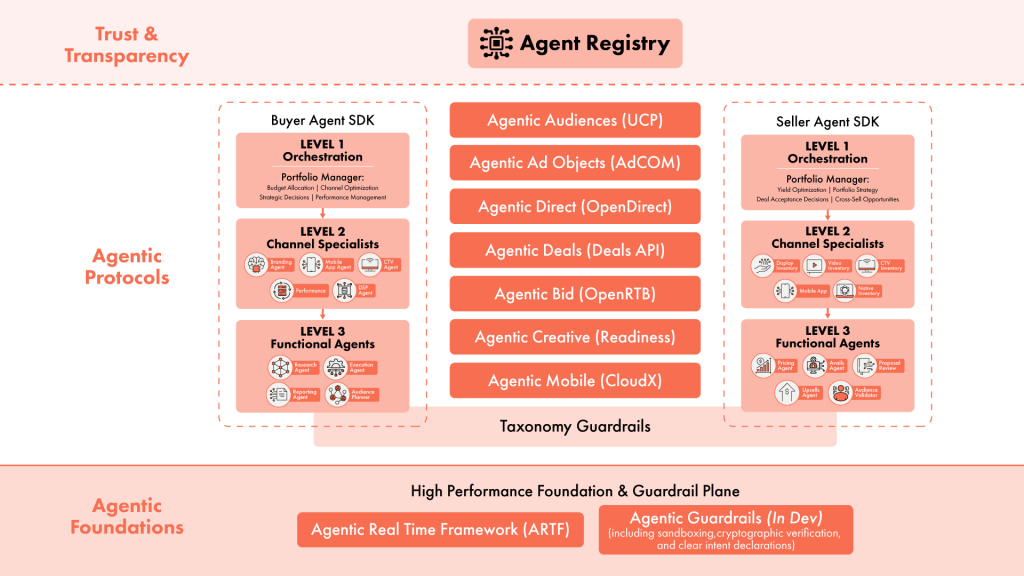
We have already released Version 2.0 of the open-source reference implementations of the Buyer Agent and Seller Agent SDKs in the Tech Lab GitHub, available for download today. In addition, OpenDirect (Agentic Direct), AdCOM (Agentic Ad Objects), and the Deals API (Agentic Deals) are now MCP-capable. Our remaining standards, including Agentic Bid, and Agentic Mobile will be MCP-capable in Q2 2026. And our Agent Registry, available to everyone in the industry who registers (for free) in our Tools Portal, went live on March 3, 2026.
As part of our commitment and investment in the future of Agentic Advertising, we are hosting monthly Agentic Boot Camps in NYC to bring experts together, showcase results, and determine next steps. This agentic shift will require the community to come together to identify use cases, discuss solutions, evolve standards, and solve problems. Tech Lab is the place to do this.
Protecting the Publisher Ecosystem
The “Open Web” is under pressure. As LLMs ingest content to serve users with summarized results, resulting in loss of traditional search traffic, the value is created upstream, not at the point of visit. We are launching real-world solutions to address this impact and enable publishers to manage compensation for their contributions upstream in the value exchange. This includes the recent v1.0 release of the LLM Content Monetization Protocol (CoMP) API, which ensures publishers can protect their intellectual property while still participating in the AI-driven discovery ecosystem.
But, it’s not only the traffic loss due to LLMs that publishers are dealing with.
Browser signal loss is not going away, so we are doubling down on our investment in the open-sourced Trusted Server initiative. By shifting the ad stack to the publisher’s server-side environment, the Trusted Server empowers publishers and their partners to improve audience signaling, ad delivery, and inventory recovery in a privacy-preserving and privacy-compliant manner. We delivered Version 1.0 earlier this year and expect to launch our first pilots in Q2, with other publishers around the world eager to follow. We’ll have a Trusted Server update in Q2 as well, so that publishers can understand the many benefits of moving server-side, which go beyond signal loss and extend to trust, transparency, and improved user experience across the ecosystem.
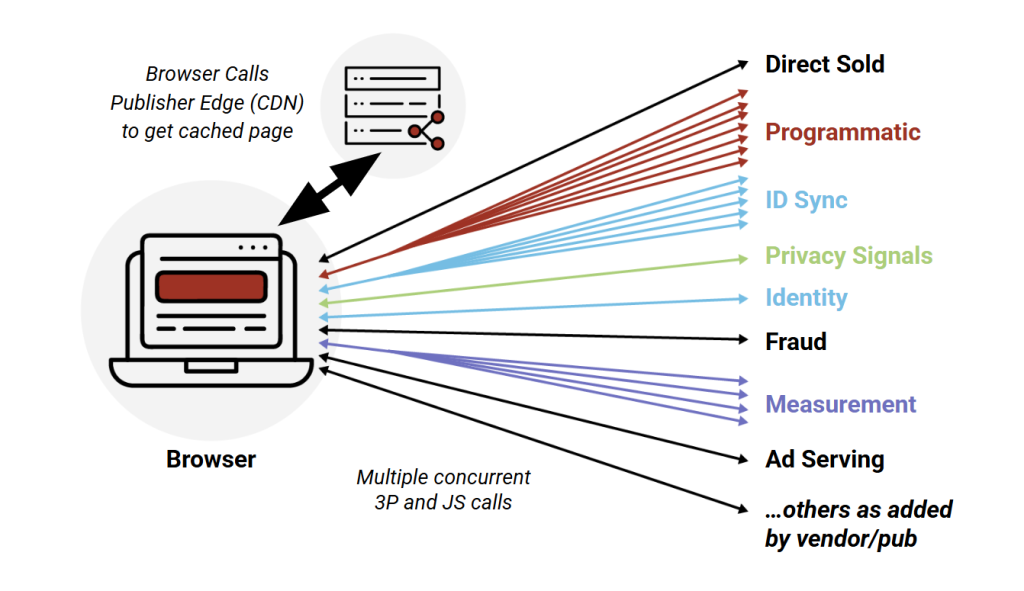
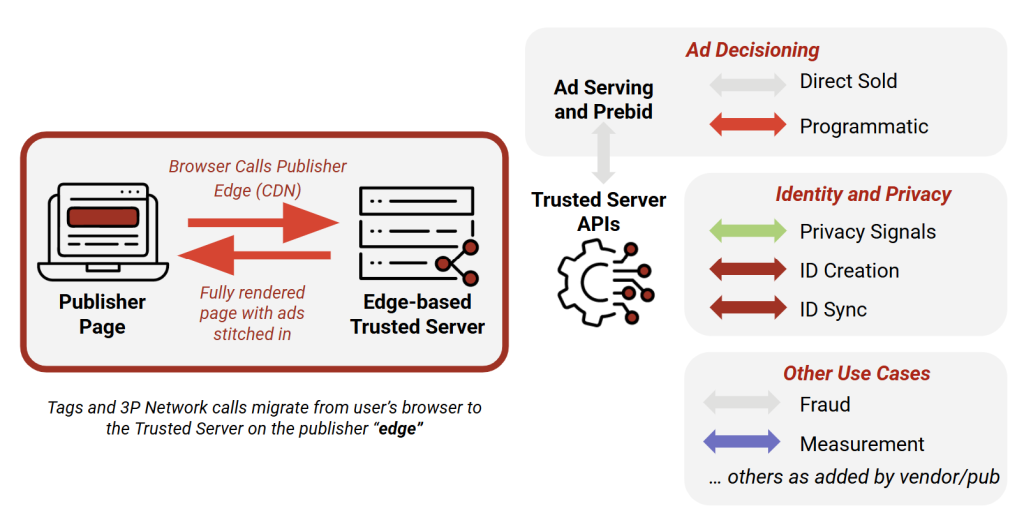
To support Publishers looking to implement Trusted Server, and developers who may want to contribute to this open-source initiative, we’re putting more of the Tech back into Tech Lab with Trusted Server Developer sessions hosted in the Ad Lab in NYC. In these sessions, we’ll encourage developers to present innovative ways they have used Tech Lab’s open-source code to drive results.
Supply Chain Evolution and Trust
The core OpenRTB specification continues to evolve, but some innovation has shifted to “sidecar” APIs, with the recent Deals API specification taking center stage. Version 1 of this critical specification helps all parties in a deal automate the process, removing the costly impact of manual processes that prevent the majority of deals from fulfilling their promise. Version 2, already under discussion, will add greater deal transparency, enhance Agentic capabilities, and introduce synchronization concepts.
Transparency and trust will continue to be core principles for the Supply Chain Foundations pillar, as it also launches a Supply Chain Transparency Compliance Program. This program will certify reporting on key supply chain transparency data points, such as the Supply Chain Object. It will enable buyers to see exactly where their dollars went and how they were distributed.
Proactive rather than Reactive Privacy
The industry is experiencing “privacy fatigue,” but compliance cannot stall, even as the pace of new regulations slows. Reflecting this, our focus is moving from creating new standards to driving adoption of existing ones. We will, however, be carefully following areas of likely regulatory scrutiny in 2026, such as youth privacy, and potential changes in Europe.
This fatigue is not only showing up in Privacy regulation interest, but also with PETs. As clean rooms remain a key solution for many in the industry, we are launching the Privacy Lab for companies to experiment with PETs using their own data in Q2. This is part of our continued mission to prepare the industry and encourage adoption in this area.
We can’t consider AI and Agentic initiatives without considering consumer privacy implications. The UCP donation from LiveRamp has been renamed to Agentic Audiences and is now available in the IAB Tech Lab GitHub repository. It enables collaboration on audiences in a privacy-first way.
Streaming Grows Up
With well over 50% of television viewing happening on CTV and Streaming platforms in 2025, we continue to focus on enabling programmatic transactions in these environments in 2026.
The Live Event Ad Playbook (LEAP) roadmap was defined in 2025, and released its first spec, the Concurrent Streams API. In 2026, we plan to release the Forecasting API, buyer instructions for Live Events, and a Creative Readiness API specification, which will benefit the entire CTV ecosystem.
Streaming platforms also offer a wide new range for ad formats, such as Pause and Menu Ads, that increase available inventory. These were defined in 2025 by the CTV Ad Portfolio, the work of creating the right signals for programmatic trading in OpenRTB, VAST, and SIMID is expected to be completed in Q2 2026.
Measuring Outcomes beyond Viewability
OM SDK and measurement continue to be critical drivers for CTV, and for the ecosystem in general. While the OM SDK’s CTV coverage is over 40% for smart TVs used globally, adding the last couple of stragglers to get closer to 90% would really change the game. This further adoption and partnership with operating systems is a key 2026 priority.
Now that OM SDK combats device spoofing through Device Attestation, it’s a critical tool in any CTV purchase. It already provided MRC-supported measurement of viewable and third party verified impressions, and CTV specific signals such as whether the TV is on and is a real human watching. This new signal to support fraud detection is a great incentive for the major streaming services to implement OM SDK for CTV on all apps, ensuring that their high value inventory is running on the high value devices they expect.
As with the Trusted Server initiative, we will be hosting an OM SDK Developer Day later in the year, in the Ad Lab in NYC, where developers can share implementation stories, and innovative uses of the SDK to further improve measurement and fight fraud in the CTV ecosystem.
Outcomes continue to be a critical ask for Brands and a way for publishers to differentiate themselves, especially in CTV. Standardization in this area has become a must-have. The Event and Conversion API (ECAPI) that was our first release of the year, will continue to evolve, and provide new ways for Advertisers to communicate the consumer outcomes they achieve from their campaigns, helping Publishers deliver more of them to everybody’s benefit.
Continued Focus on Education and Governance
Industry adoption is key for reaping the benefits of any technical standard. Thus, developing industry standards comes with the responsibility of ensuring education, awareness, and adoption. In 2026, we will hold over 30 education and awareness events, either virtual or in person in New York, to ensure the adoption and accurate implementation of Tech Lab standards. We will also continue our deep dive sessions with Board Member companies, and engagement with brands and agencies in collaboration with the IAB.
Some of our key adoption efforts include new types of content, in-person (and sometimes virtual) Member events, and our webinar series.
- CTV Ad Operations Workshop: After full houses for the past 3 years, we’ll be continuing this hands-on session focused on operationalizing CTV standards led by Tech Lab Product and Member experts
- Expanded educational materials: We’ll also be expanding our series of Explainer videos and Tech Lab takes on what’s going on in the industry, including the Programmatic Auction Definitions in support of the MRC Auction transparency initiative. Let us know if there’s something you’d like us to focus on.
- Educational Webinars: We’ll be continuing our webinars on Tech Lab Standards with the Product and Industry colleagues who helped develop them, and we’ll be taking some of our replays and editing them down into short-form content for those of you with limited time on your hands.
- Programmatic Governance Council: This initiative, launched late in 2025, aims to bring together the different organizations and companies, including agencies, brands, and publishers, that have oversight into the programmatic ecosystem to openly debate and discuss issues and concerns that have been raised, and to try and resolve differences collaboratively.
Our Events calendar is packed for 2026, including our first event in Germany, and our marquee Summit event, which has sold out the last 2 years. Tech Lab Summit: Welcome to the Agentic Web is unmissable, with three key tracks of content: the agentic consumer experience, the agentic web economy, and, of course, agentic in advertising. Headlining the agenda will be Sir Tim Berners-Lee, who invented the World Wide Web. Who better to provide insight into where this is all going?
Keep an eye on our events page, ensure you are subscribed to our newsletter, and follow us on LinkedIn to register for the in-person workshops as soon as they are announced. Space is limited, and they fill up fast!
Moving Forward Together
The 2026 Roadmap is so much more than just a list of technical specifications; it is a commitment to the C-suite across both the buy-side and the sell-side of the industry. We are increasing our focus on the business value of the standards we support, enhance, and invest in, ensuring that leaders understand why Tech Lab standards are essential for the bottom line for Brands, Publishers, Agencies, and Technology companies alike.
The digital media ecosystem is finding efficiencies with agentic AI and eager to discuss how things will continue to shift. Our job is to ensure that conversation happens in a language that is open, transparent, and secure.
I invite you to join our working groups, or contribute to our open-source task forces which will accelerate the agentic frameworks, and the trusted server initiative, and help us build the next generation of the digital ad stack.
Anthony Katsur
CEO
IAB Tech Lab